Streamer University
A hundred thousand people applied in two days. The form was the easy half.
[Visit the site ↗]
- applications in under 48 hours
- 100,000+
- page hits
- 7M+
One system.
Three states.
- 01
Applications
The public campaign feeds the review portal.
- 02
Accepted class
The review portal produces the student roster.
- 03
Live campus
Students and staff use the portal while cameras roll.
- Client
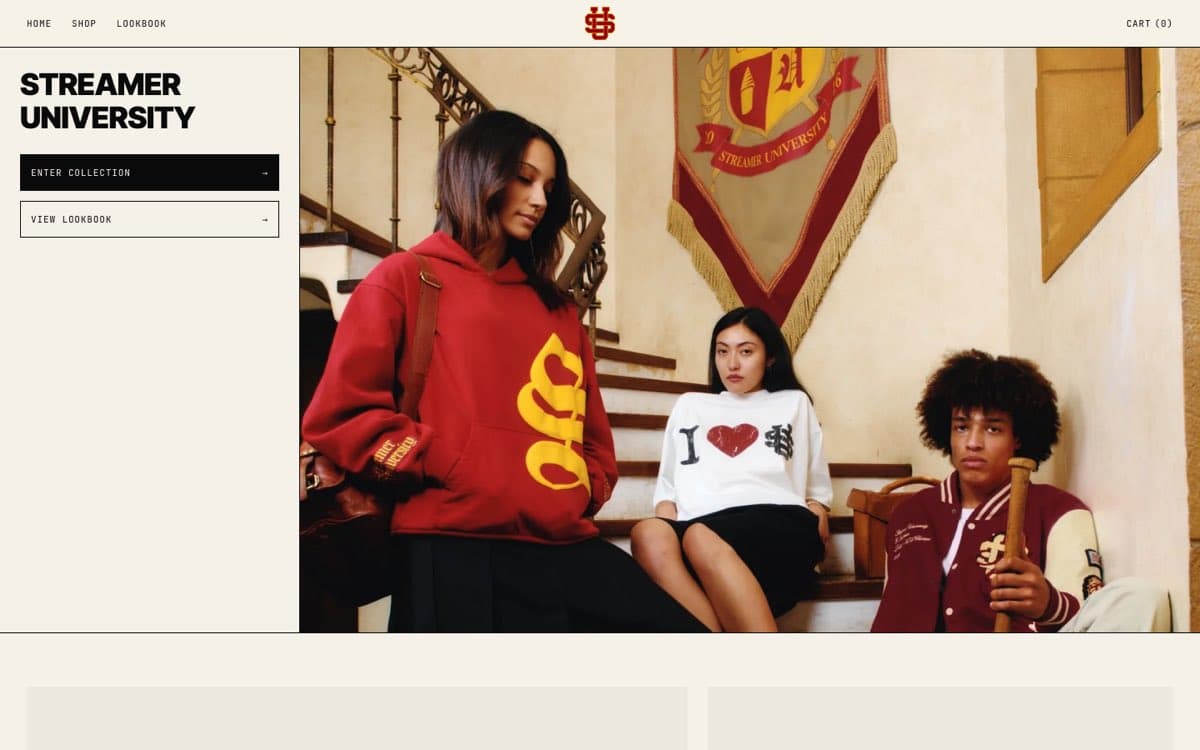
- Kai Cenat / Streamer University
- Scope
- Marketing site · Application and admin review · Student and staff portal · iOS and Android app · Merch store · Yearbook
- Built with
- Next.js · React Native · Shopify
The brief
Streamer University is Kai Cenat’s campus. It had to open applications to the public, select a class from what came back, then run a live on-campus event with students and staff on camera.
Three moments, months apart, each one in front of an audience of millions.
Anyone can build the form. Almost nobody scopes the surface that has to read what the form collects.
The constraint
This was not four products launching on one day. It was a relay, and every handoff was pinned to a broadcast date that could not move.
Applications open first. The public site takes the announcement, the application takes the volume, and an admin portal has to read and accept what arrives. Then the class is revealed. Then students and staff walk onto a campus that is already streaming, and the portal they use has to hold while cameras are pointed at it.
The hard part is the order. Review tooling is worthless if it ships after the applications land, and 100,000 of them arrived in under 48 hours.
What we built
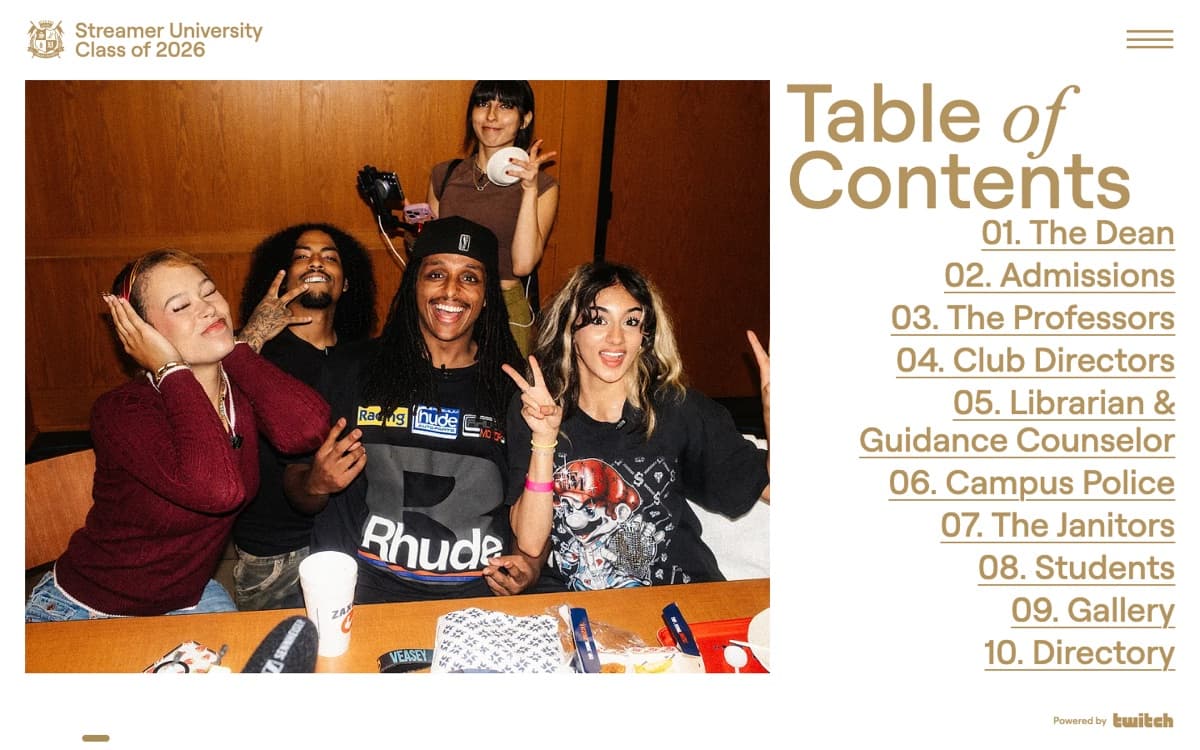
The public marketing site. The application itself. An admin portal to review and accept applicants. A student and staff portal for the on-campus phase. A mobile app on iOS and Android. A merch store.
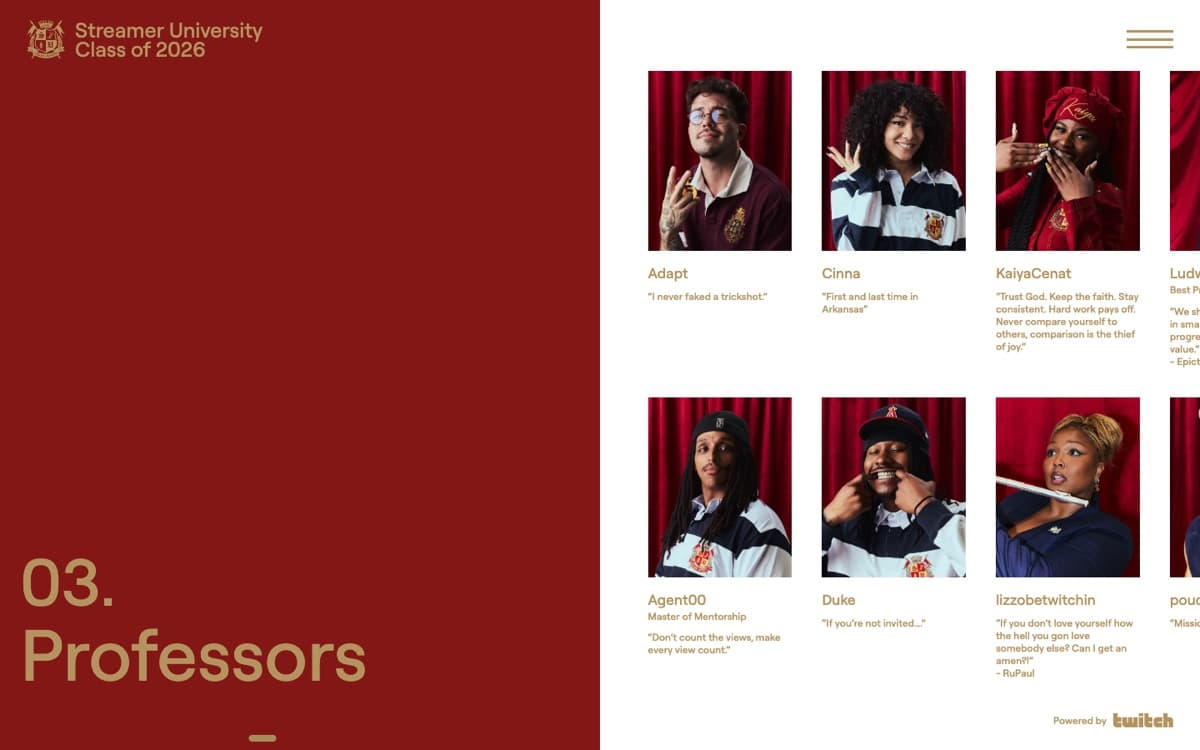
The Class of 2026 yearbook. Twitch partnered with Streamer University on it, and Twitch and space150 designed it. We built it on the Streamer University site at /yearbook, working with Twitch to get it live: the Dean, admissions, professors, club directors, staff, every student, a photo gallery, and a directory.
One studio, one room, across all three phases.
The decisions
The admin portal shipped with the application, not after it. In an open call the bottleneck is acceptance, not submission. Building the review surface first meant the team worked through applications as they landed instead of watching a queue fill up.
The portal is its own product behind auth. Student and staff data never touches the public marketing site, and the portal could be hardened for the live phase without anyone touching the surface the public sees.
Every phase reused the last one. The application fed the admin portal, the admin portal produced the accepted class, and the accepted class became the portal’s roster. One system in three states rather than three separate builds that have to be reconciled by hand.
Commerce stayed on Shopify, deliberately off the critical path. Payments, inventory, and fulfillment are solved problems. Keeping them on infrastructure that already solved them meant the store was never the thing that could take the rest of it down.
Your turn.
[Start something ↗]